
Time's Traces · Nº 01
Sailing Stones
With Sailing Stones, time no longer runs out.
It leaves a mark.
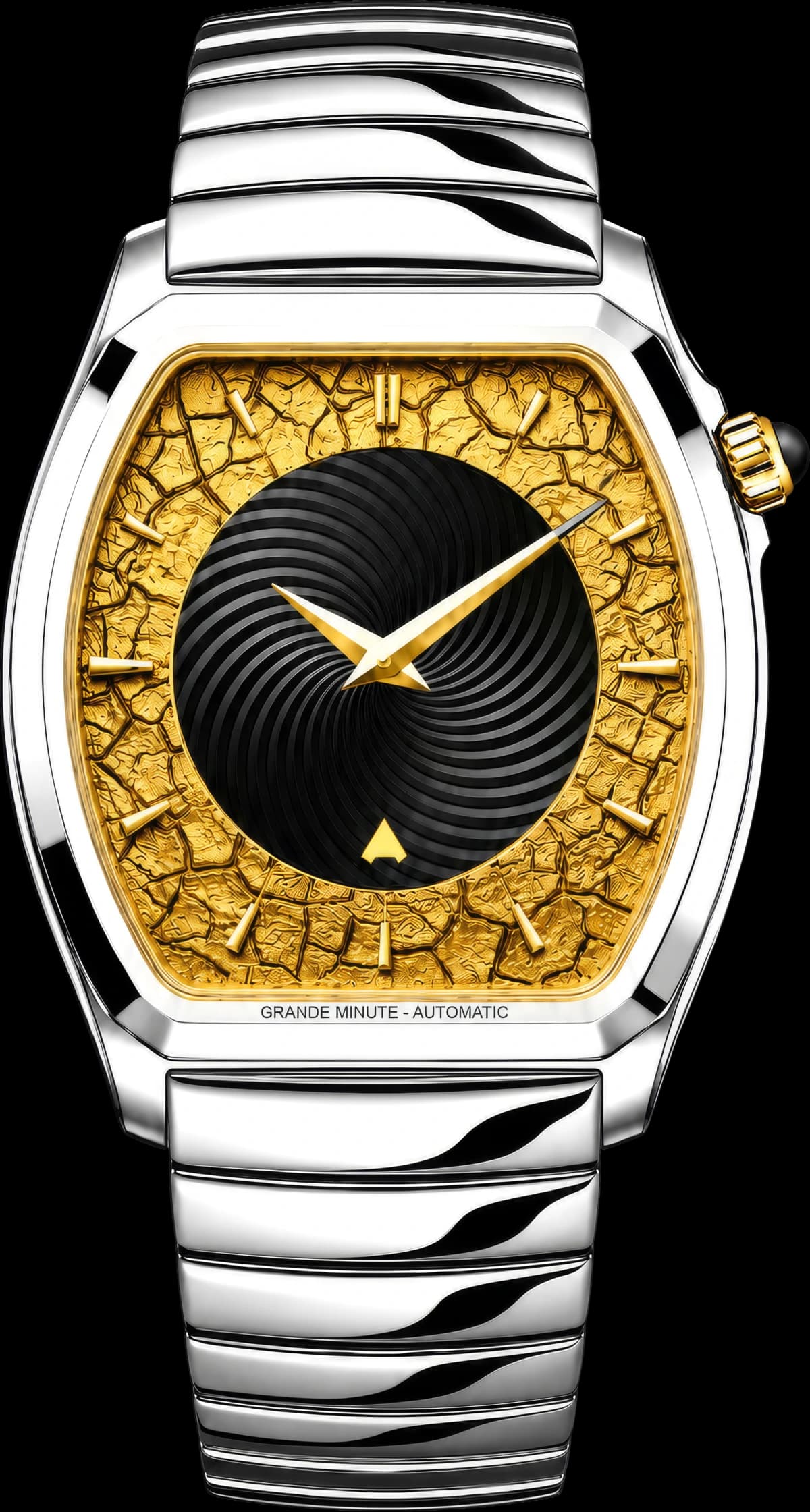
Born of the mystery of the wandering rocks of Racetrack Playa, deep in Death Valley, the Sailing Stones watch turns one of nature’s most compelling enigmas into a watchmaking experience. Its hammered, sunlit dial is the dried playa. The Grande Minute hand is the magical, unwavering journey of a wandering stone. The spellbinding helical guilloché of the black disc draws the trail of its century-long passage.
time’s traces · collection nº 01
“Sailing Stones” is the first timepiece of the Time’s Traces concept. A collection that turns the most mysterious and ancient marks time leaves on nature into watchmaking experiences.
But beyond the traces time prints on the world, it asks about the ones we choose to leave there. Every timepiece is therefore an invitation to ask THE one question:
What trace will we leave when our time has run its course?
A desert mystery on the wrist.
The watchmaking concept and the striking dial of your “Sailing Stones” timepiece reveal a riddle as old as the world. The magical travels of the wandering stones, the sliding stones — also known as travelling rocks — across Racetrack Playa.
The mystery of the sailing stones was solved in 2014. A thin film of water sometimes covers the playa. It freezes overnight and forms invisible panels of ice. Driven by the wind, those panels slowly carry the stones across the mud. When the sun warms the desert again, the ground cracks anew. The stones leave nothing behind but those long tracks, which give the illusion of a magical movement.
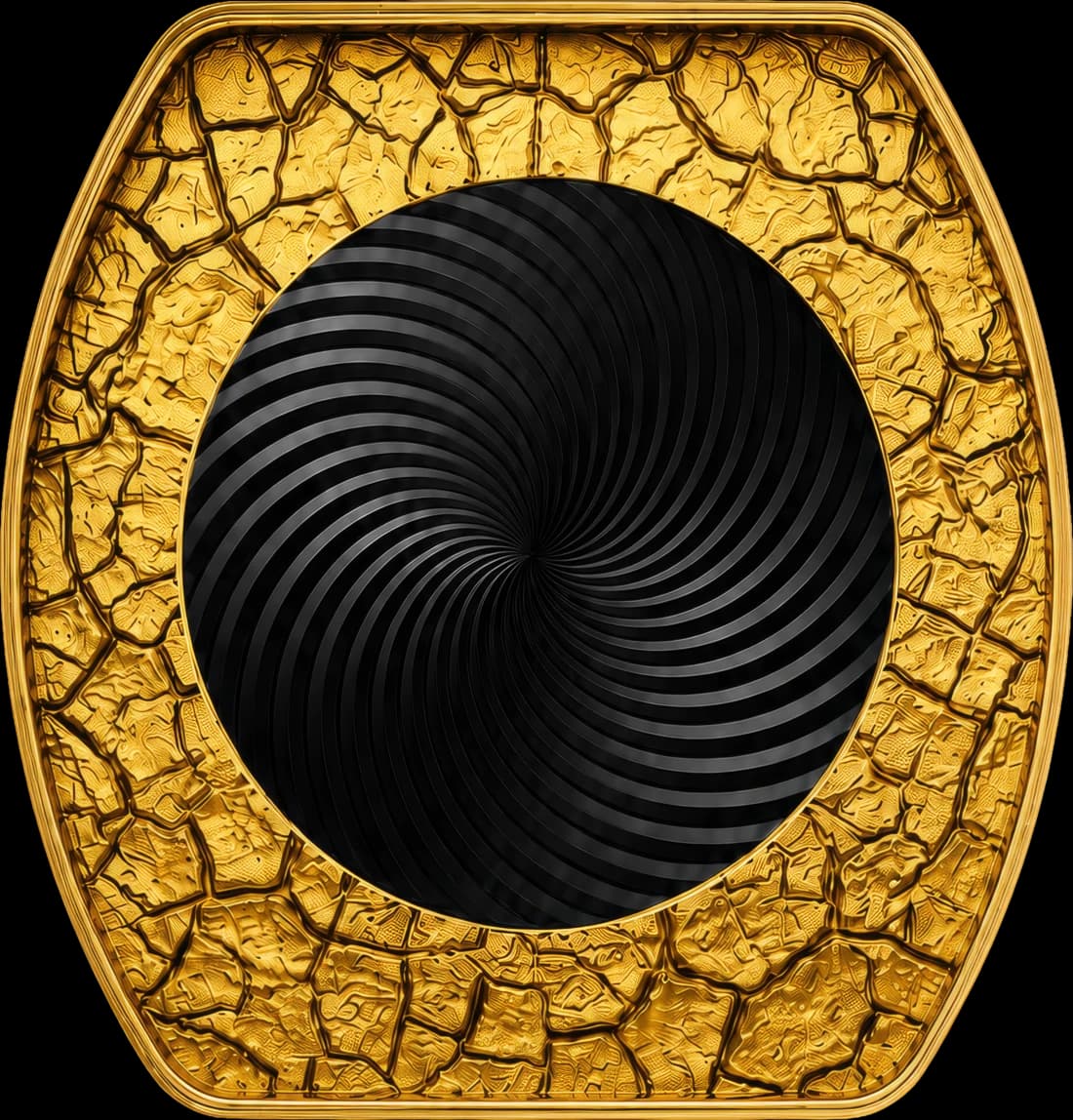
The watch brings that phenomenon to the wrist. Its hammered sand-gold dial forms the cracked lakebed. The anthracite-tipped Grande Minute becomes the travelling stone. The black central disc, cut in hypnotic helical guilloché, holds the trail.

The hammered sand-gold dial is the playa.
The anthracite tip of the Grande Minute is the moving stone.
The black disc, cut in helical guilloché, is the trail it leaves in time.
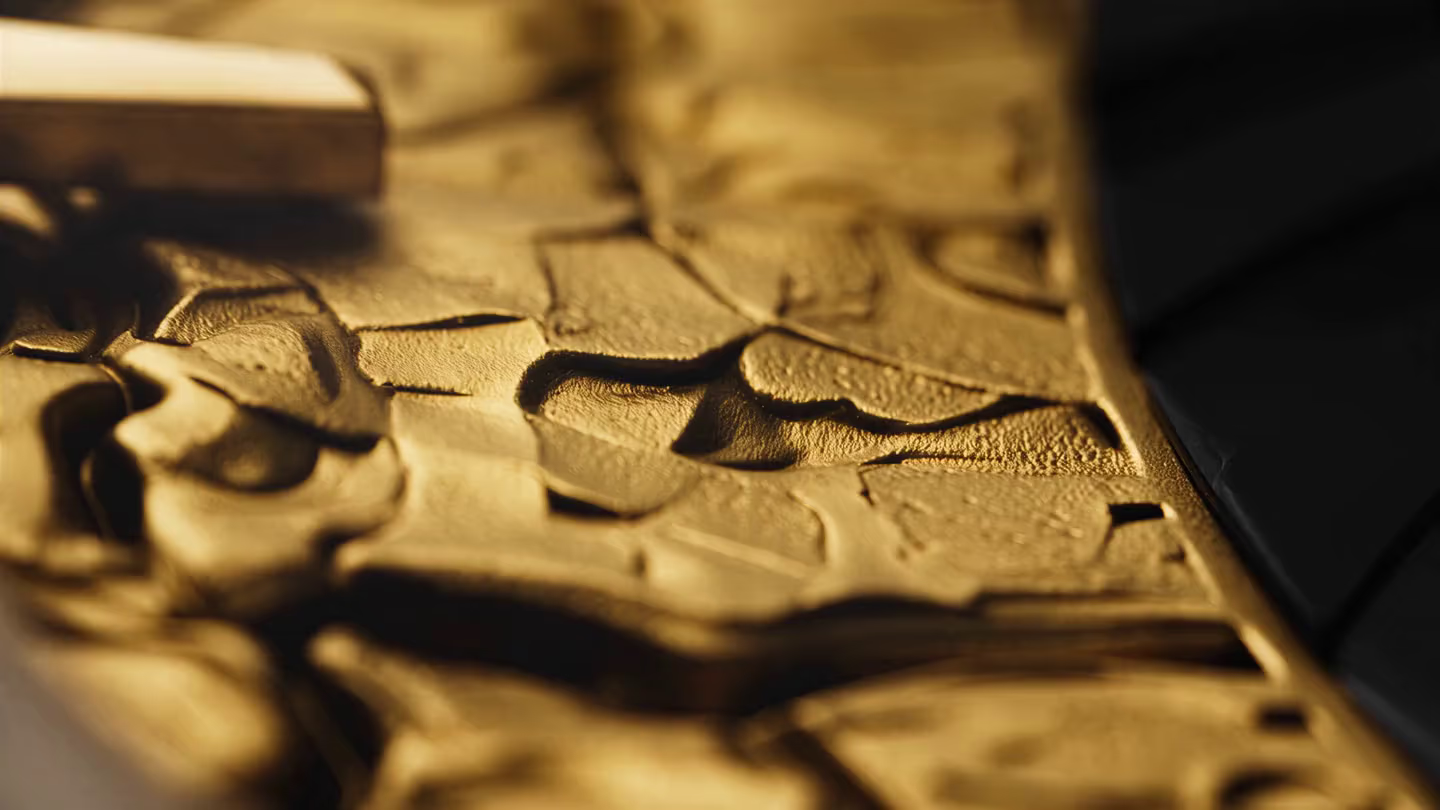
the object
the playa in the dial · then the watch, whole
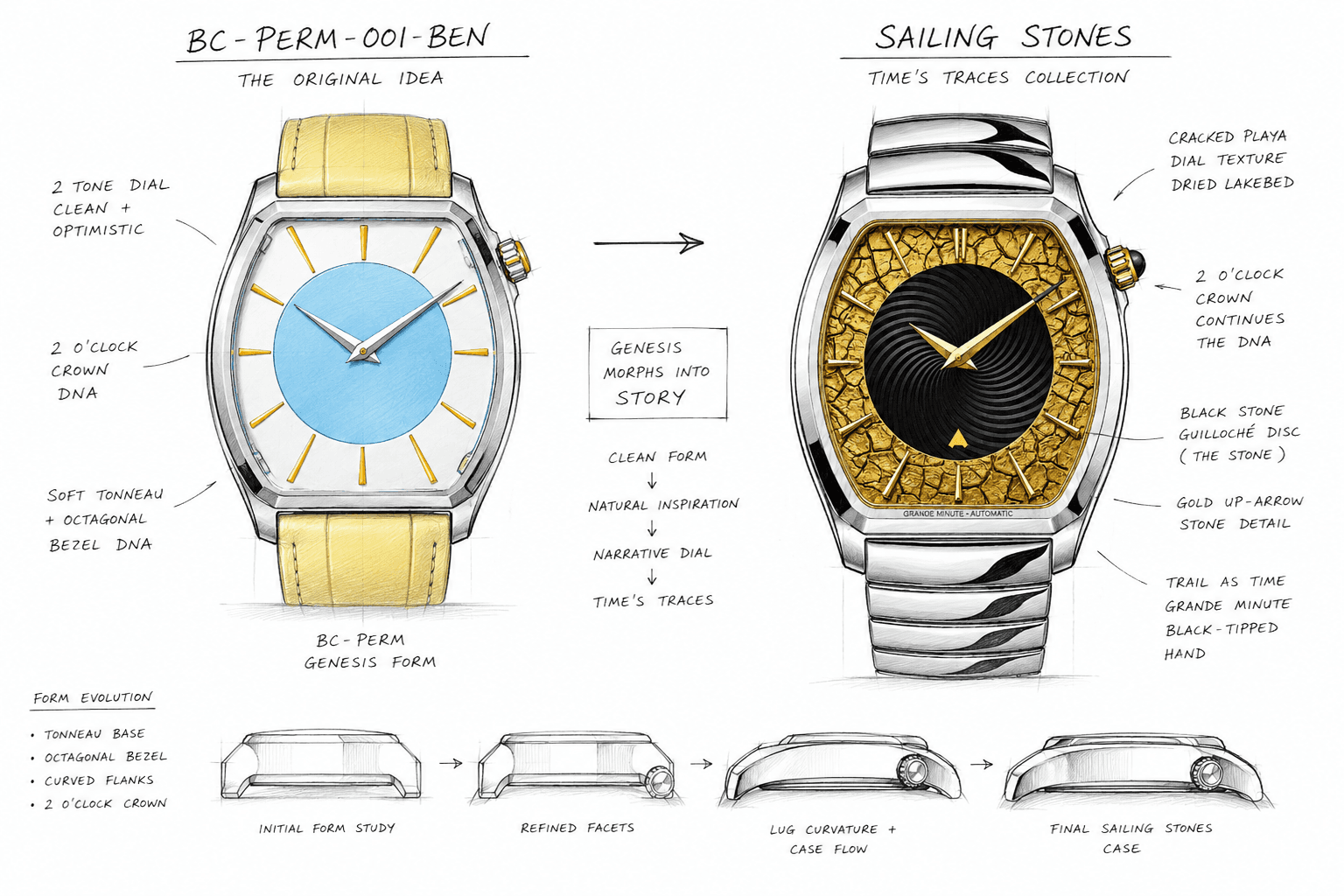
plate iii · stone & trail · scroll to advance
The stone and its trail, set in motion.
Slowly, as you read, the anthracite-tipped Grande Minute of the Sailing Stones watch completes its revolution around the dial. That revolution, like the black guilloché disc, stands for the travel of the stone and the winding furrow it cuts into the cracked ground. The trail it draws then stays fixed on the disc forever.
One revolution. Sixty stations. A magical journey of stone and watchmaking.
field notes · racetrack playa · 36.6814° n
How a stone sails.
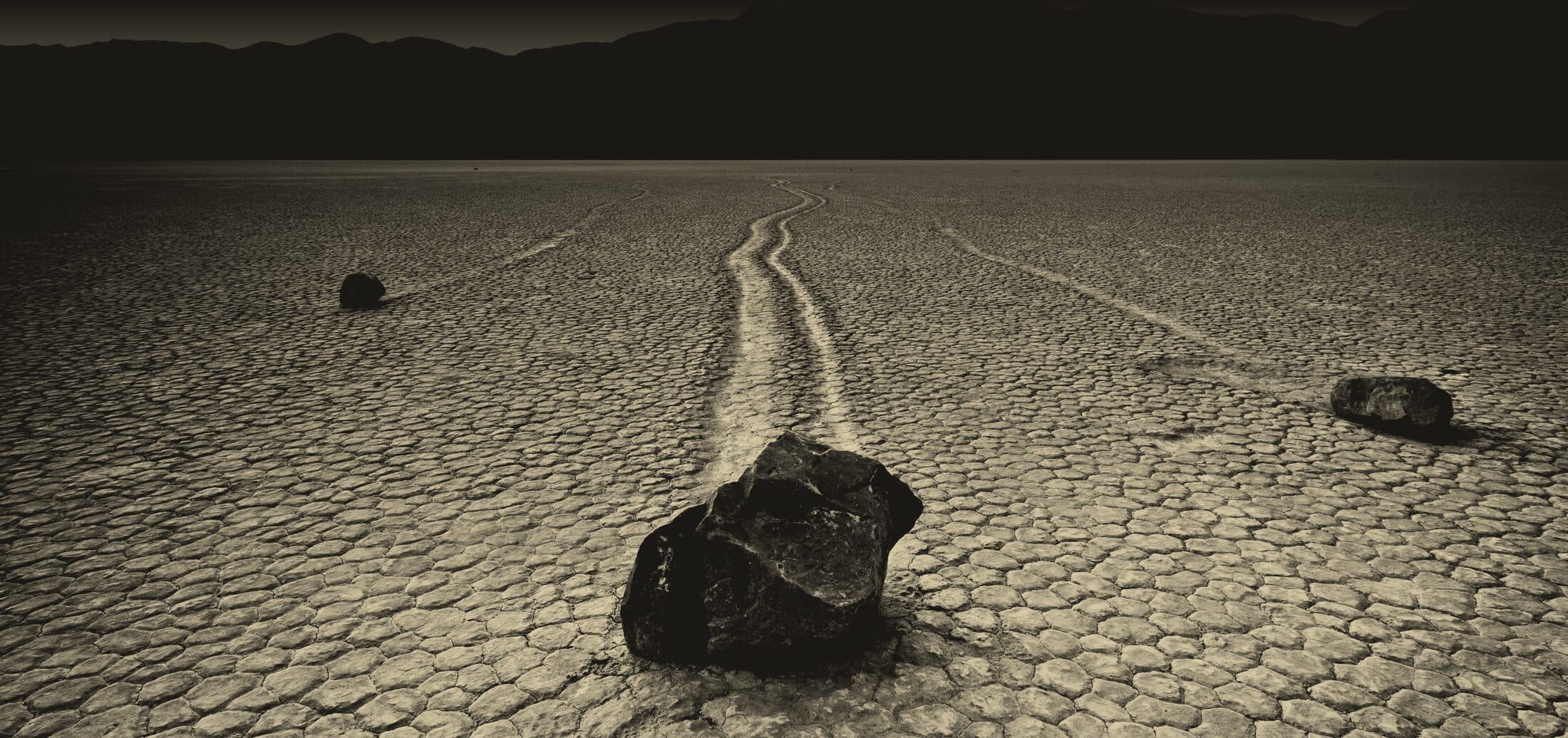
On a dry lakebed in the north-west corner of Death Valley, rocks leave long, straight trails — tens, sometimes hundreds of metres — across the cracked mud, as if a hand had dragged them. For decades the trails were mapped and the rocks were never once seen to move.
The trails wander and cross as if each rock had chosen its route, and for most of a century the explanations were not scientific ones: traditions of the American West spoke of invisible desert spirits dragging the stones in the dark.
The answer is ice. In winter the playa floods a few centimetres deep and freezes overnight into a thin windowpane sheet. The late-morning sun cracks it into floating panels, and a light wind is enough to push the panels, and the rocks frozen into them, across the mud. A study published in PLOS ONE in 2014 was the first to catch it happening.
flooda few cm of winter water freeze3–6 mm windowpane ice, overnight sail~4–5 m/s wind, 2–5 m/min
Racetrack Playa
36.6814° N117.5630° W
elev ~1,130 m · north-west death valley national park · california
source · Norris, R. D., Norris, J. M., Lorenz, R. D., Ray, J. & Jackson, B. (2014). Sliding Rocks on Racetrack Playa, Death Valley National Park: First Observation of Rocks in Motion. PLOS ONE 9(8): e105948. doi.org/10.1371/journal.pone.0105948
the two hours of the playa

case study · sm1322 · the dress tonneau, redrawn
The curved tonneau.
A dress tonneau, redrawn where elegance meets sport: 31 × 41 mm in 316L steel, a gently curved case that settles against the wrist, and flanks drawn inward at the waist.
The curve is not decorative. It answers a simple question: how can a watch hold an elegant, almost hypnotic presence and still sit quietly on the wrist?
Along the flanks and facets, satin brushing alternates with mirror polish. Steel catches the light like clay and stone in the desert: soft sculptural volumes, shaped by time and cut by hard sun.
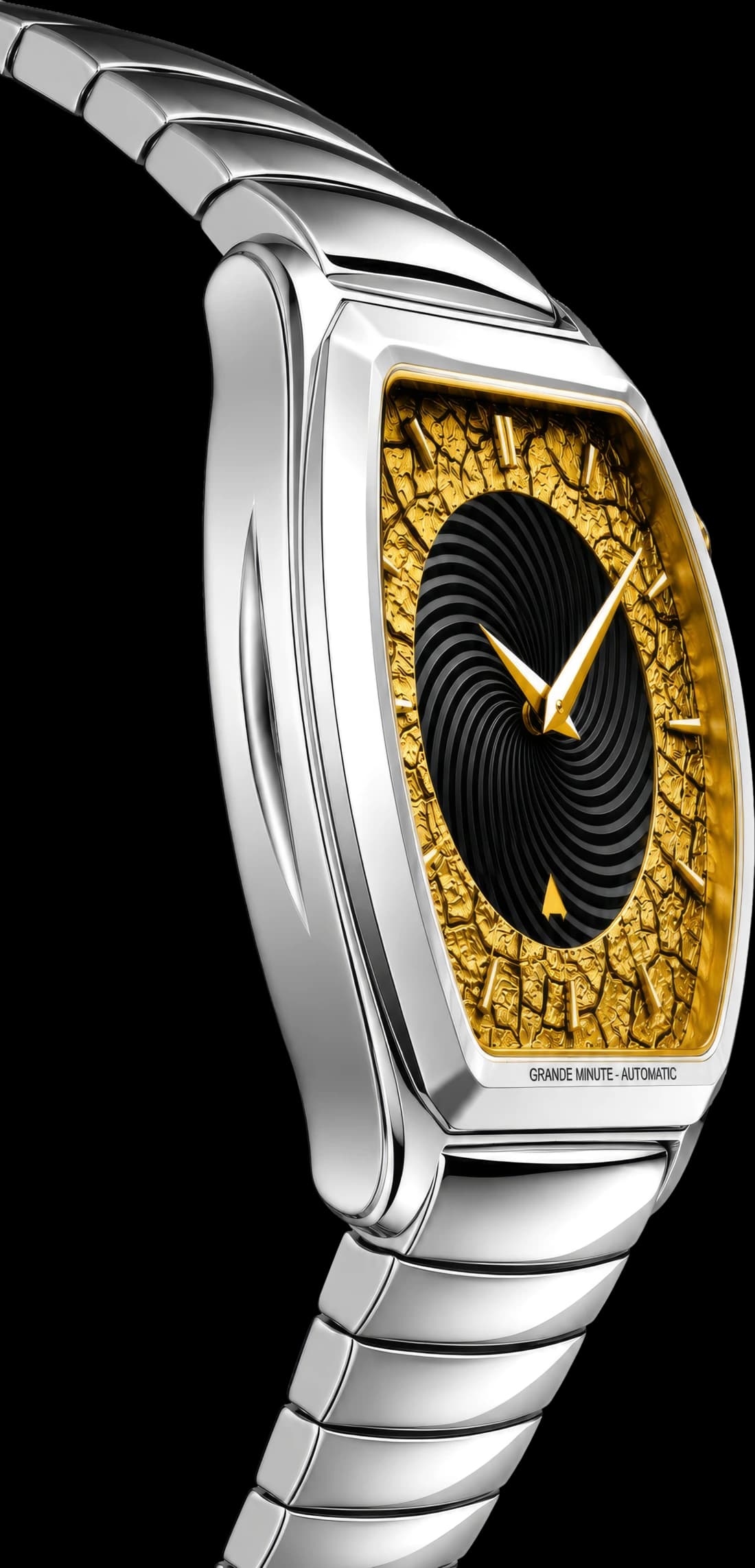
dial map · sm1322
The playa, the stone, the trail.
Sailing Stones is built on three elements. The playa: a hammered sand-gold field. The stone: the anthracite-tipped Grande Minute, moving in a slow, endless circle. The trail: a magnetic black disc in helical guilloché. A curved tonneau case, offset crown at 2 o’clock and octagonal bezel hold them together.
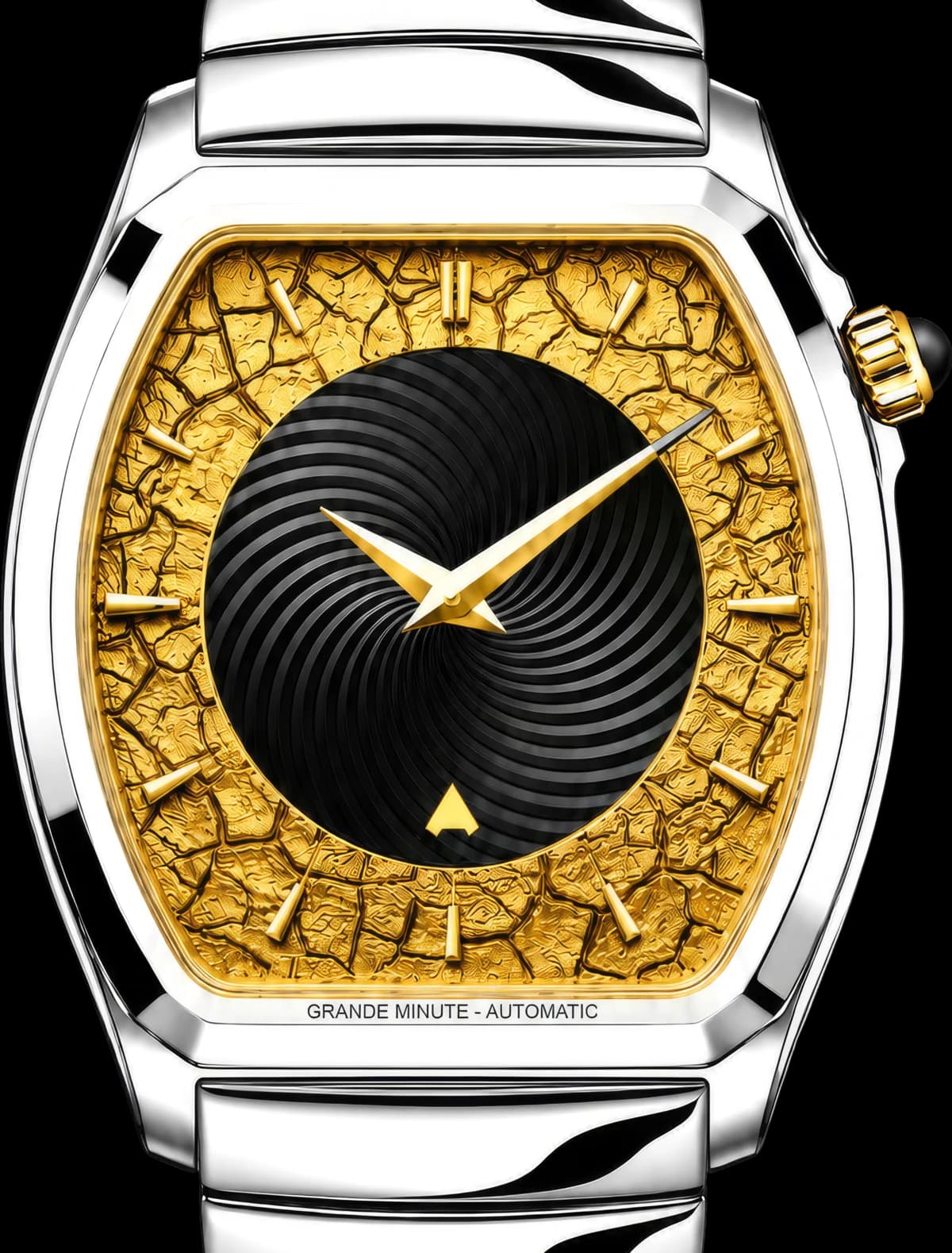
fig. 06 · dial map
Select a marker to read the part it names. Each one lights its place on the dial.
The full sheet of eighteen follows below.
plate iv · specifications
What is on the wrist.
Honest specs from the factory drawing: no Swiss claim, no invented numbers.
| 01 | Movement | Miyota 8215. Japanese automatic, hand-windable, 21 jewels, ~21,600 vph, ~40h power reserve |
|---|---|---|
| 02 | Case material | Stainless steel 316L, polished and brushed |
| 03 | Case shape | Gently curved dress tonneau with octagonal bezel and facets; concave flanks |
| 04 | Case size | 31.0 × 41.0 mm |
| 05 | Dial opening | 24.5 × 28.4 mm |
| 06 | Dial, outer field | Hammered sand-gold finish, cracked like the dry bed of Racetrack Playa; subtle mirror-polished applied hour markers |
| 07 | Dial, centre | Black central disc in helical guilloché: the trail |
| 08 | Hands | Dauphine pair in desert-gold PVD · Petite Heure (hour) 6.0 mm · Grande Minute (minute) 11.5 mm with an anthracite-painted tip: the sailing stone in motion |
| 09 | Bezel | Steel brushed inner rehaut, gold-plated edge accent; engraved GRANDE MINUTE · AUTOMATIC at bottom |
| 10 | Crystal | Sapphire (front and caseback) |
| 11 | Crown | Asymmetrical at 2 o'clock · Ø 5.0 mm T-tube, 18-tooth, set with a black gemstone cabochon |
| 12 | Caseback | Solid steel, engraved Death Valley map · TIME'S TRACES · SAILING STONES · BLACK CORNER · Automatic Grande Minute · Limited Edition 1 of 100 · 5 ATM |
| 13 | Bracelet | 316L steel flex/expansion bracelet (no clasp). Sizes: XS 18×122 mm · S 18×136 mm · L 18×151 mm |
| 14 | Lug width | 18.0 mm |
| 15 | Water resistance | 5 ATM |
| 16 | Lume | None, by design |
| 17 | Edition | Limited to 100 pieces · caseback engraved 1 of 100 |
| 18 | Warranty | 2-year international |
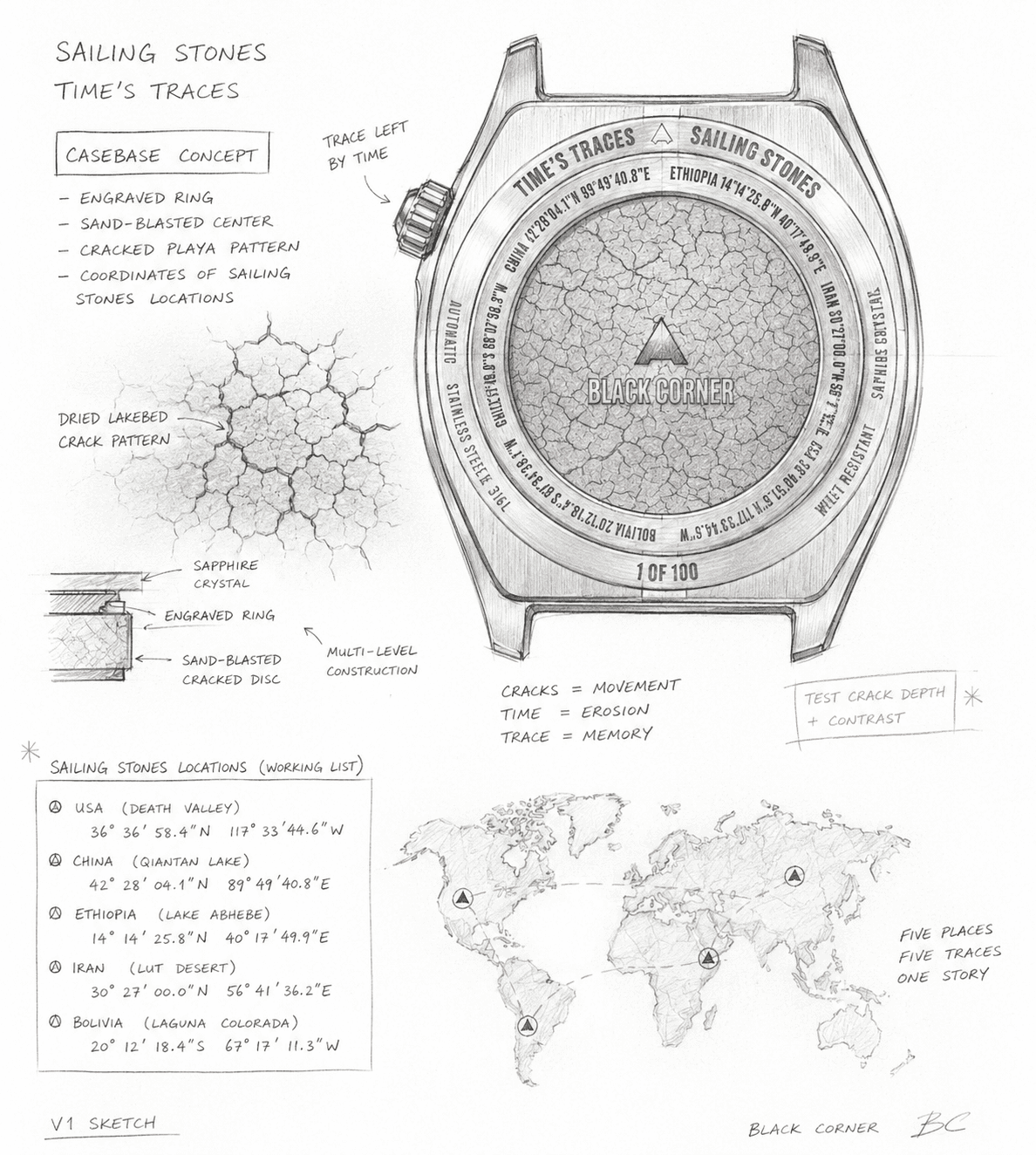
plate v · edition mark
engraved on the caseback
One hundred pieces. One edition, engraved 1 of 100.
The caseback is engraved with a stylised map of Death Valley, the Black Corner name, and the edition mark 1 of 100 — one run of 100, not a serial register. Time's Traces · Sailing Stones · Automatic Grande Minute · Limited Edition · 5 ATM. When the run is done, the SKU closes. Sailing Stones is chapter one of Time's Traces; every chapter to come will live in its own equally limited run.
provenance
Each piece ships with a certificate of authenticity, signed by hand.
in the box · sailing stones automatic · certificate of authenticity · outer carton · soft pouch · two-year warranty
Things people ask.
- What are the sailing stones?
- The sailing stones, also called moving rocks, are dolomite and syenite boulders that leave long, straight trails across the dried mud of Racetrack Playa in Death Valley National Park, California. For decades nobody had seen them move. In 2014 a study published in PLOS ONE by Norris et al. documented the mechanism for the first time: in winter the playa floods with a few centimetres of water, freezes overnight into thin sheets of ice, and when the morning sun thins the ice, light wind drags the floating ice panels, and the stones embedded in them, across the surface, scoring the playa floor.
- Where is Racetrack Playa?
- Racetrack Playa is a dry lakebed in the north-west corner of Death Valley National Park, California, at roughly 36.6814° N, 117.5630° W. It sits at about 1,130 m elevation, surrounded by the Cottonwood and Last Chance mountain ranges, and is reached only by a long unpaved road.
- What is the Time's Traces collection?
- Time's Traces is Black Corner's collection of watches inspired by strange, documented phenomena and the marks time leaves on the world around us. It also asks what kind of trace is ours to leave. Each chapter takes one real phenomenon as its subject and lives in its own limited run. Sailing Stones, inspired by the moving rocks of Racetrack Playa, is chapter one.
- What movement powers the Sailing Stones watch?
- Sailing Stones is powered by the Miyota 8215, a robust Japanese automatic calibre with hand-winding, 21 jewels, a ~21,600 vph beat rate and a ~40-hour power reserve. We chose Japanese automatic over a Swiss movement deliberately: it keeps the watch honest at €650, and Miyota's reliability is the right partner for a piece you wear in the desert, not a vault.
- Why is the minute hand called Grande Minute?
- Grande Minute means the minute hand is the principal indication of the dial: an oversized Dauphine hand, paired with a deliberately shortened Petite Heure hour hand. Both are finished in desert-gold PVD so they melt into the cracked-gold playa of the dial; only the fine anthracite tip of the Grande Minute, reaching out past the black guilloché disc, catches the eye. As it sweeps, it drags the stone across the desert floor, making the watch's central metaphor mechanical instead of decorative.
- How big is the case?
- Sailing Stones uses a tonneau case in 316L stainless steel measuring 31.0 × 41.0 mm with curved flanks. The dial opening is 24.5 × 28.4 mm. Lug width is 18 mm and the bracelet is a 316L steel flex/expansion bracelet with no clasp.
- Is it water resistant?
- Yes. Sailing Stones is rated to 5 ATM, suitable for splashes, rain and brief swimming in shallow water. It is not a diver and should not be worn for diving or high-pressure activities. Sapphire crystal protects both the dial and the engraved caseback.
- How many will be made?
- 100 pieces. Every caseback is engraved 1 of 100 — one edition, not a serial register. Once they are gone the SKU closes. Sailing Stones is the first chapter of Time's Traces, and each future model in the collection will live in its own equally limited run.
- Does it have lume?
- No. Sailing Stones has no luminous material on the hands or indices, by design. The dial is read in daylight, the way the playa is read in daylight; the stones don't move at night.
- When does it ship and how do I reserve one?
- Estimated delivery: autumn 2026, and no later than 15 December 2026. Pre-orders open at launch for €650, paid in full. The final retail price will be €790. No deposit, no number to choose.
- What's the warranty and return policy?
- Each Sailing Stones comes with a 2-year international warranty covering manufacturing defects on the movement, the case and the bracelet. Returns: standard 14-day window from receipt for unworn pieces in their original packaging. Pre-orders can be cancelled for a full refund any time before the watch ships.

Pre-order for €650. Final retail price: €790.
- pre-order price
- €650
- edition
- 100 pieces
- ships
- Autumn 2026
at rest · 36.6814°n · 117.563°w
Black Corner · Time's Traces nº 01